
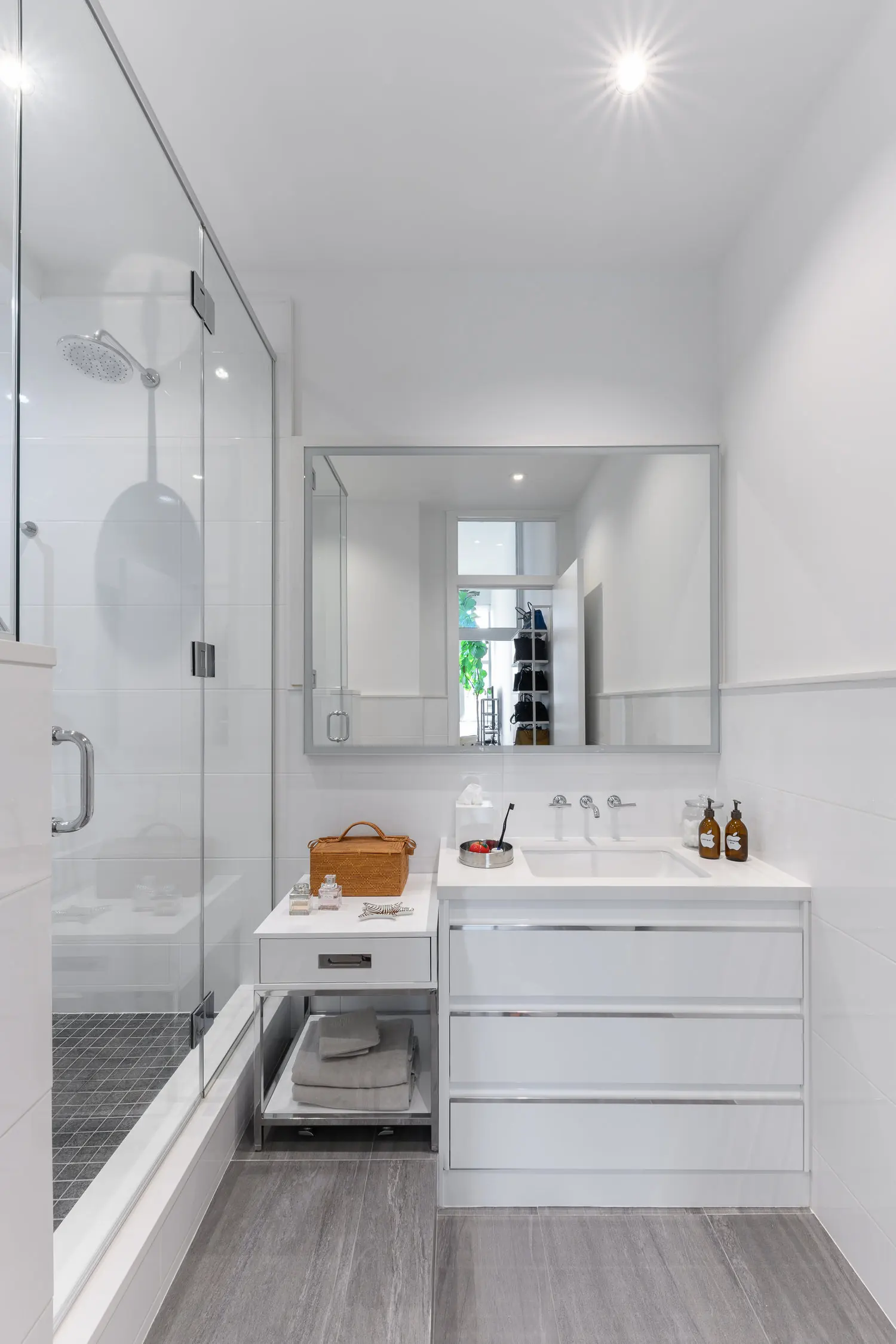
In an apartment building, a bathroom leak rarely stays your problem. A failed caulk line or cracked grout can drip into your neighbor's ceiling for weeks before anyone notices. The good news is that most of it is preventable with a simple routine.
This guide covers how to prevent water damage in a NYC apartment bathroom: the checks to do each season, what wears out first, and when maintenance is no longer enough and the shower needs real waterproofing.
Where bathroom leaks usually start
Most leaks start at joints, not pipes. Water gets past worn caulk, cracked grout, a loose toilet seal or a failing tub drain and soaks the floor or wall below.
Pipes do fail, especially old galvanized ones in prewar buildings, but slow seepage around fixtures is far more common and far easier to stop.
A seasonal bathroom maintenance checklist
Do this every few months. It takes less than half an hour.
- Press along the caulk at the tub, shower and sink. Replace any that is peeling, cracked or moldy.
- Look for cracked or missing grout, especially at the base of shower walls and corners.
- Rock the toilet gently. Any movement or water at the base can mean the wax seal has failed.
- Check under the sink for drips, damp wood or stains.
- Fill the tub, then drain it and look for stains on the ceiling below if you can access it.
- Clear slow drains before they back up.
- Run the exhaust fan during and after showers to dry the room.
- Look at the shower door or curtain for water landing on the floor.
Caulk and grout: the first line of defense
Caulk seals the joints that move, like where the tub meets the wall. Grout fills the joints between tiles. Both wear out, and neither is fully waterproof on its own.
Replace caulk by cutting out the old bead completely, cleaning and drying the joint, then laying a fresh line. Putting new caulk over old caulk traps water and fails fast. Cracked grout can be raked out and replaced, then sealed if it is cement based.
Choose a caulk made for kitchens and baths, with mold resistance, and let it cure for the full time on the label before the shower gets wet. Rushing this step is the most common reason a fresh bead fails within weeks. In a shower that gets daily use, plan on checking the bead again after the first month.
Toilets, tubs and drains
A toilet that rocks has likely broken its wax seal, and every flush can send a little water under the floor. Resetting it with a new seal is a small job that prevents a big one.
Tubs leak at the overflow and the drain gaskets. These are easy to miss because they only leak when the tub is full. If the ceiling below stains after baths but not showers, start there. Our plumbing team can test and reseal these quickly.
Maintenance or waterproofing: how to tell
If water keeps showing up after caulk and grout are fresh, the problem is probably behind the tile. Here is how to tell what you are dealing with.
| What you see | Likely cause | Usual fix |
|---|---|---|
| Moldy or peeling caulk | Worn sealant | Remove and recaulk |
| Cracked grout lines | Age or movement | Regrout and seal |
| Stain below only after baths | Tub overflow or drain gasket | Reseal tub drain parts |
| Water at toilet base | Failed wax seal | Reset toilet |
| Loose or hollow sounding tiles | Water behind tile | Remove tile, repair, waterproof |
| Soft floor near tub or toilet | Long term leak, rotted subfloor | Open up, replace subfloor, rebuild |
What real waterproofing looks like
Tile and grout are not a waterproof layer. In a well built shower, a waterproof membrane sits behind the tile on the walls and under it on the floor, sloped to the drain.
Many older NYC bathrooms were built without a proper membrane, or with one that has failed. When that is the case, the only lasting fix is to remove the tile, install a membrane and retile. Our waterproofing and tile installation work is done together for this reason.
If you live above someone else
Most co-op and condo rules make you responsible for damage that starts in your unit. Many buildings also require a waterproofing membrane and a flood test before a renovated bathroom is closed up.
If water has already reached your neighbor, our guide on a bathroom ceiling leak from the apartment above explains the steps from both sides.
Step by step: what to do the moment you see water
- Stop using the fixture you suspect.
- Close the fixture's shutoff valve if there is one.
- Dry the area and take photos.
- Tell your super or managing agent, and your neighbor below if it could reach them.
- Call a plumber or contractor to find the source before patching anything.
Ventilation and humidity
Moisture that stays in the air ends up in the walls. A bathroom without a working exhaust fan stays damp, which breaks down caulk and grout faster and feeds mold on ceilings and in corners.
Many older NYC bathrooms have no window or only a small one, so the fan does the real work. Run it during every shower and for a while after, and check that it actually pulls air.
- Hold a square of toilet paper to the fan grille. If it does not stick, the fan or duct needs attention.
- Clean the grille of dust a few times a year.
- Leave the door open after showers so the room dries out.
- Wipe down shower walls and the door if mold keeps coming back.
In a renovation, a quieter fan with a timer or humidity sensor is a small upgrade that protects everything else you paid for. Our electrical work covers fan circuits and switching.
Get a bathroom checked or rebuilt
We repair leaks and rebuild bathrooms with proper waterproofing in buildings across the city. See our bathroom remodeling service or the Queens neighborhoods we serve.
Frequently asked questions
- How often should I recaulk my bathtub?
- Check it every few months and replace it whenever it is cracked, peeling or moldy. In a busy bathroom that can mean once a year or more. Always remove the old caulk fully first.
- Is grout waterproof?
- No. Grout is porous and lets some water through, even when sealed. The real waterproofing in a shower is a membrane behind the tile. Sealing grout helps slow water and stains.
- Why does my ceiling only stain when I take a bath?
- That usually points to the tub overflow or drain gaskets, which only get wet when the tub is full. A plumber can test and reseal them.
- Who pays if my bathroom leaks into the apartment below?
- Many co-op and condo rules make the owner of the unit where the leak starts responsible. Your building's rules and your insurance policy decide the details, so check both and report leaks quickly.
- Do I need a waterproofing membrane when I renovate my bathroom?
- It is the right way to build a shower, and many buildings require it along with a flood test before closing up. It protects you and your neighbors for years.
Have a question about your project? Call us at (516) - 751 - 4527 or send us a message on our contact page.